
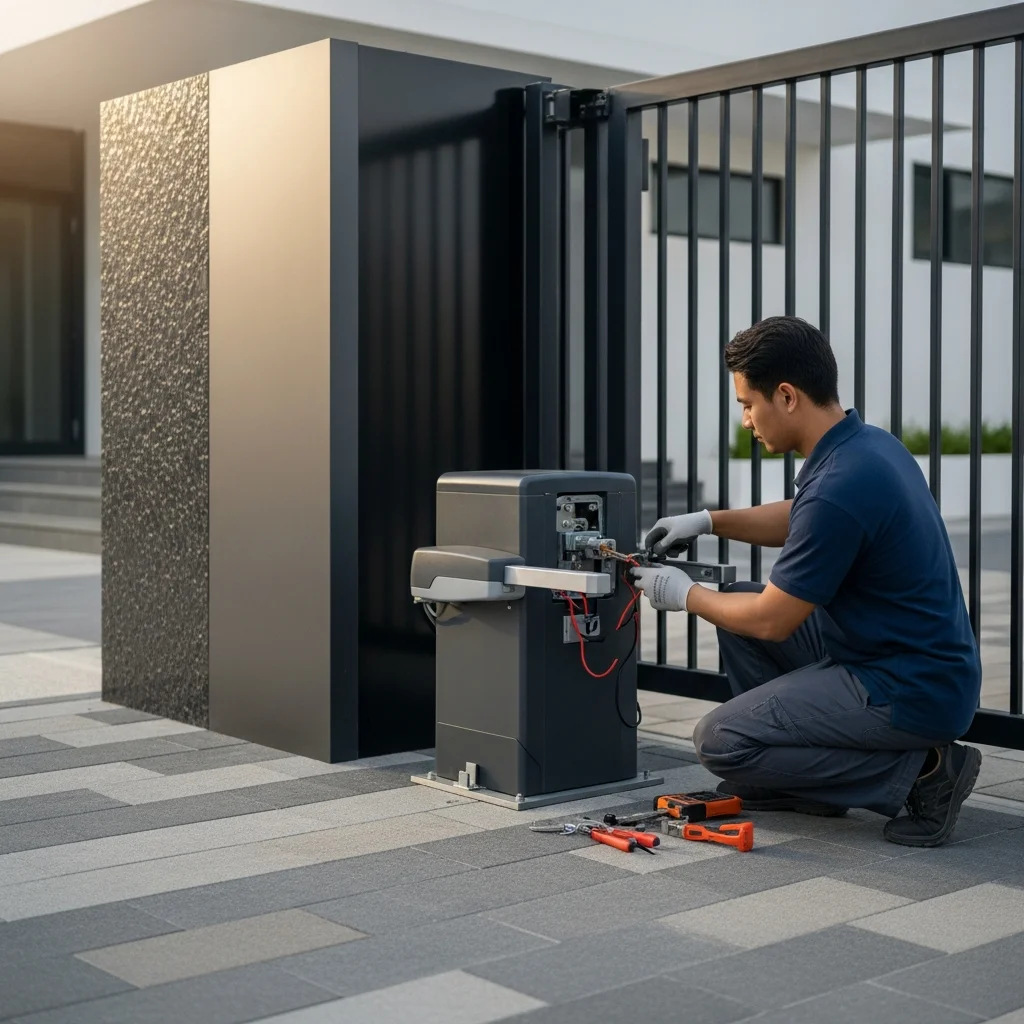
In the field of electric gate repair, understanding the intricate interplay between electrical systems and mechanical components is essential for maintaining the operational integrity of your entryway. Initial diagnostics should focus on a thorough examination of the gate's power supply and motor functionality, often exposing underlying issues such as voltage inconsistencies or gear misalignments. Additionally, environmental factors such as debris accumulation and weather impacts require regular assessments to prevent mechanical degradation. This approach not only guarantees the longevity of the gate mechanisms but also enhances security features. By delving further, advanced troubleshooting techniques can tackle even the most intricate issues, ensuring optimal gate performance.
Electric gates represent a significant investment in property security and convenience. When these sophisticated systems malfunction, understanding the fundamentals of gate repair becomes crucial for property owners. SF Bay Automatic Gates recognizes that many gate issues can be diagnosed and addressed through systematic troubleshooting, though complex problems may require professional intervention.
Identifying Common Electric Gate Problems
In the domain of automated entry systems, electric gates are vital for security and convenience, yet they are not immune to operational issues. Common problems include erratic movement, often caused by obstructions in the gate's path or issues with the transmission gears. Electrical faults may arise due to wiring degradation or faulty sensors, which disrupt the gate's ability to receive or interpret command signals accurately. Over time, mechanical wear can affect hinges and rollers, leading to misalignment and noisy operation. Environmental factors such as extreme temperatures and moisture can also compromise component integrity. Identifying these issues accurately is essential for maintaining the longevity and functionality of electric gate systems, ensuring they remain reliable safeguards and assets for properties.
Power Supply Failures
The most fundamental issue affecting automatic gate repair involves power disruptions. Gates that fail to respond to commands often suffer from electrical supply problems. Circuit breakers may trip due to power surges or overloaded circuits. Transformer failures prevent proper voltage delivery to gate motors, rendering the entire system inoperative. Damaged or corroded wiring connections create resistance that degrades system performance over time.
Property owners should verify that electrical panels show active circuits dedicated to gate systems. Tripped breakers require investigation before simple resetting, as repeated trips indicate underlying problems requiring professional electric gate repair services. Outdoor electrical connections face particular vulnerability to moisture infiltration, which corrodes terminals and creates intermittent connectivity issues.
Gate Opener Repair Challenges
Gate opener mechanisms represent complex assemblies where electrical and mechanical systems converge. Motors may burn out from excessive strain caused by misaligned tracks or damaged wheels. Circuit boards controlling gate functions deteriorate from age, power fluctuations, or moisture exposure. Capacitors that provide starting power to motors often fail after years of service, preventing gates from initiating movement despite receiving proper signals.
Remote control receivers experience frequency interference or component failure that prevents signal recognition. Limit switches that tell gates when to stop moving can become misaligned or damaged, causing gates to travel too far or not far enough. These gate opener repair issues require careful diagnosis to distinguish between controller problems and mechanical failures affecting system operation.
Mechanical Component Deterioration
Driveway gate repair frequently addresses mechanical wear affecting smooth operation. Hinges on swing gates develop play in pivot points, creating wobbling and stress on operators. Wheels on sliding gate repair projects wear unevenly, causing binding and increased motor strain. Chains and belts stretching over time affect gate timing and positioning accuracy.
Metal gate repair often involves addressing rust and corrosion that weaken structural components. Welds can crack under repeated stress cycles, particularly at mounting points bearing the gate's full weight. Bearings seize from lack of lubrication or contamination by dirt and debris. These mechanical issues compound electrical problems, as motors working against increased resistance draw excessive current that accelerates component failure.
Sensor and Safety System Malfunctions
Modern residential gate repair must account for sophisticated safety systems designed to prevent accidents. Photoelectric sensors that detect obstructions become misaligned or dirty, causing false obstruction signals that prevent gate operation. Ground loop sensors embedded in driveways can break or lose sensitivity, failing to detect vehicles waiting for access.
Edge sensors mounted on gate leading edges may suffer damage from impacts or weather exposure. When safety systems malfunction, gates may refuse to close completely or reverse unexpectedly. Some systems enter lockout modes when detecting sensor problems, requiring specific reset procedures before normal operation resumes. SF Bay Automatic Gates emphasizes that bypassing safety systems represents dangerous practice that creates liability concerns.
Environmental and Weather-Related Issues
Wrought iron gate repair and other outdoor installations face constant environmental challenges. Temperature extremes cause metal expansion and contraction that affects alignment and creates mechanical stress. Ice accumulation prevents gate movement and can damage components when motors attempt to force frozen mechanisms. Summer heat accelerates lubricant breakdown and can cause electronic components to overheat.
Vegetation growth interferes with gate paths, triggering safety sensors or physically obstructing movement. Debris accumulation in tracks creates obstacles and accelerates wear on wheels and rollers. Wind loading on large gates stresses motors and operators, particularly during storms. Regular inspection identifies environmental damage before minor issues escalate into major gate motor repair projects.
Step-by-Step Repair Techniques
Having identified common electric gate problems, the next step involves applying specific gate repair techniques to address these issues effectively. Begin by inspecting the electrical connections for corrosion or looseness; a multimeter can be invaluable here for maintaining ideal voltage levels. If the issue is mechanical, such as a misaligned gate track or worn rollers, adjust or replace the affected components carefully using the manufacturer's guidelines. For software issues, a reset or firmware update might be necessary, typically accessed via the system's control panel. Remember, detailed diagnostics using specialized tools, like circuit testers or diagnostic software, can pinpoint less obvious faults. Always ensure power is disconnected before attempting any repairs to avoid accidents and create a safe working environment.
Electrical System Diagnostics
Professional electric gate repair begins with systematic electrical testing. Using a multimeter, technicians verify voltage at multiple test points throughout the system. The transformer should deliver specified voltage to the control board, typically 12-24 volts DC for most residential systems. Voltage drops between components indicate resistance from corroded connections or damaged wiring.
Current draw testing reveals motor health. Motors drawing excessive amperage while running struggle against mechanical resistance or suffer from internal winding damage. No current flow despite applied voltage suggests open circuits in wiring or motor windings. Testing should progress logically from power source through control systems to motors, isolating problem areas systematically.
Control board diagnostics require technical knowledge and proper equipment. Testing input signals from remotes, keypads, and sensors verifies that controllers receive commands. Output testing confirms whether boards send appropriate signals to motors and accessories. Many modern boards feature diagnostic modes that display error codes indicating specific failures, simplifying troubleshooting for trained technicians.
Gate Motor Repair and Replacement
Motor issues require careful evaluation to determine whether repair or replacement offers the better solution. Brushes in DC motors wear progressively and can be replaced relatively easily. Capacitors typically mount externally and can be tested and swapped by technicians familiar with electrical systems. However, burned windings, damaged gearboxes, or seized bearings generally necessitate complete motor replacement.
When performing sliding gate repair involving motors, proper alignment proves critical. Mounting brackets must position motors to apply force parallel to gate travel direction. Misalignment creates unnecessary resistance and accelerates wear. Gear engagement requires precise adjustment, too tight creates binding while too loose allows slippage under load. Professional installation ensures motors operate within design parameters, maximizing longevity.
Emergency gate repair situations sometimes require temporary solutions. Motors from other manufacturers may be adapted if identical replacements are unavailable immediately. However, matching voltage, torque ratings, and mounting configurations requires technical expertise. Improper substitutions may damage control systems or create safety hazards that liability concerns make unacceptable for responsible service providers.
Mechanical Adjustment and Component Replacement
Automatic gate repair addressing mechanical issues starts with comprehensive inspection. Hinges should be examined for wear, looseness, and proper lubrication. Play in hinge pins allows gates to sag, creating misalignment that stresses operators. Replacing worn bushings or the entire hinge assembly restores proper operation and reduces motor strain.
Wheel and roller replacement represents common maintenance for sliding systems. Wheels should spin freely without wobbling or binding. Worn wheel bearings create resistance and uneven travel that affects system performance. V-groove wheels must match track profiles precisely, mismatched components cause rapid wear and potential derailment. Installing properly rated wheels designed for gate weight prevents premature failure.
Track alignment directly affects system operation. Tracks must be level along their length and properly positioned relative to gate mounting. Deviation from level causes gates to roll toward lower track ends, creating uneven motor loading. Improper spacing between track and gate bottom results in binding or excessive play. Laser levels and precision measuring tools ensure accurate track installation during driveway gate repair projects.
Control System Programming and Adjustment
Modern gate opener repair often involves controller programming rather than physical component replacement. Access codes must be programmed correctly for remotes, keypads, and access control systems. Opening and closing force limits require adjustment to balance security against safety, gates must close firmly without creating excessive impact force that damages components or presents injury risks.
Travel limits define gate endpoints. Improperly set limits cause gates to travel too far, potentially damaging stops or operators, or not far enough, leaving gaps that compromise security. Most systems allow fine-tuning these parameters through controller interfaces. Adjustment procedures vary by manufacturer but generally involve putting controllers into programming modes and using specific button sequences.
Timing parameters control operation speed and delays. Slow-start and slow-stop settings prevent jerky operation that stresses mechanical components. Pause delays determine how long gates remain open before automatic closing. Obstacle detection sensitivity requires calibration to prevent false triggers while ensuring reliable obstruction detection. SF Bay Automatic Gates technicians understand that proper programming is as crucial as physical repairs for optimal system performance.
Safety System Testing and Calibration
Residential gate repair must verify that all safety systems function correctly. Photoelectric sensor alignment requires precise adjustment, beams must align perfectly for reliable operation. Dirty lenses block signals even when alignment is correct, requiring regular cleaning. Mounting hardware must hold sensors rigidly to prevent vibration-induced misalignment.
Edge sensor testing verifies that gate contact immediately triggers reversal. Sensors should respond to light pressure rather than requiring significant impact force. Damaged or worn edge sensor switches fail to trigger reliably, creating hazardous conditions. Ground loop sensitivity adjustment ensures reliable vehicle detection while minimizing false triggers from reinforcing steel or utilities.
Manual release mechanisms require testing to confirm they disengage operators properly during power failures. Release cables should operate smoothly without excessive force. Some jurisdictions mandate specific release configurations for emergency access, compliance verification prevents code violations. After any gate repair work, comprehensive safety system testing ensures that all protective features function as designed.
Preventive Maintenance Protocols
Metal gate repair needs decrease dramatically when preventive maintenance schedules are followed. Lubrication of hinges, wheels, chains, and pivot points reduces friction and wear. However, lubricant selection matters, some products attract dirt that accelerates wear while others provide inadequate protection under load. Proper lubricants maintain effectiveness across wide temperature ranges encountered outdoors.
Regular cleaning removes debris before accumulation causes problems. Tracks require frequent attention in areas with falling leaves or wind-blown debris. Gate surfaces benefit from periodic washing that removes corrosive materials. Electrical connections should be inspected for corrosion, with protective coatings applied to vulnerable areas.
Scheduled professional inspections identify developing problems before failures occur. Technicians performing wrought iron gate repair maintenance measure wear on critical components, test electrical system performance, and verify proper adjustment of all parameters. Documentation creates maintenance histories that identify patterns and predict when component replacement becomes necessary. Preventive maintenance costs significantly less than emergency gate repair service calls and system downtime.
Advanced Troubleshooting Techniques
Intermittent Problem Diagnosis
Some of the most challenging electric gate repair situations involve intermittent failures that do not occur during testing. Temperature-dependent problems disappear when systems cool or warm to different operating points. Vibration-induced failures require gates to operate under load before symptoms appear. Humidity-related issues manifest during specific weather conditions.
Systematic documentation helps diagnose intermittent problems. Recording when failures occur, environmental conditions, and any patterns helps identify triggers. Data logging equipment monitors system parameters continuously, capturing anomalies that occur between inspection visits. Thermal imaging identifies components operating at abnormal temperatures, indicators of developing failures before complete breakdown occurs.
Interference and Signal Problems
Gate opener repair increasingly addresses radio frequency interference affecting remote controls and wireless accessories. Nearby transmitters, power lines, or electronic equipment can disrupt signals. Switching to different frequencies or shielding receivers may resolve interference problems. Cell phone boosters and wireless networks occasionally create conflicts requiring frequency coordination.
Control system interference sometimes originates within gate systems themselves. Arc suppression on motor contactors prevents electrical noise from disrupting controllers. Proper grounding eliminates potential differences that induce currents in signal wiring. Separating power and control wiring prevents coupling that introduces noise. Professional automatic gate repair services understand these technical considerations essential for reliable system operation.
Software and Firmware Issues
Modern control systems rely on embedded software that occasionally requires updates. Firmware bugs may cause unexpected behaviors or limit functionality. Manufacturers release updates addressing known issues and adding features. However, updating firmware requires technical knowledge and proper procedures, incorrect updates can render controllers inoperable, necessitating factory service.
Some controllers retain programming through power failures while others lose settings requiring reprogramming. Battery backup systems in controllers need periodic replacement to maintain memory retention. After power outages, controllers may require recalibration or relearning of gate positions. Understanding these system-specific requirements prevents confusion during gate motor repair work following electrical disruptions.
When to Call Professional Services
Safety Considerations
While property owners can address some basic troubleshooting, many aspects of electric gate repair require professional expertise. Working with electrical systems presents shock and electrocution hazards. High-voltage circuits in some commercial systems pose extreme danger to untrained individuals. Even low-voltage systems can cause injury or death under certain conditions.
Gate mechanisms under spring tension or heavy gate weight create crushing and impact hazards. Improper procedures during sliding gate repair can result in gates falling or moving unexpectedly. Professional technicians understand proper lockout/tagout procedures and use appropriate safety equipment. Liability concerns make professional service prudent for any work beyond simple cleaning and visual inspection.
Complex Diagnostic Requirements
Advanced diagnostic equipment and technical training distinguish professional services from amateur attempts. Oscilloscopes analyze signal waveforms revealing problems invisible to basic multimeters. Specialized programmers access controller functions unavailable through standard interfaces. Experience with specific manufacturers and models guides efficient troubleshooting that would require excessive trial-and-error otherwise.
Driveway gate repair on sophisticated systems with integrated access control, intercom, and surveillance components demands understanding of multiple technologies. Problems may originate in any of these interconnected systems or their interfaces. SF Bay Automatic Gates technicians possess diverse skills necessary to diagnose and repair complete integrated systems rather than isolated components.
Warranty and Compliance Concerns
Many gate systems carry warranties that require professional installation and service. Amateur repairs void warranties, potentially costing thousands in coverage loss. Insurance requirements may mandate certified technicians for work on gates protecting commercial properties. Local codes often specify licensed contractors for electrical work, with permits and inspections required.
Professional emergency gate repair services provide documentation valuable for insurance claims and compliance verification. Repair records demonstrate proper maintenance when liability questions arise. Permitted work adds value during property sales, while unpermitted modifications create complications that delay or prevent transactions.
Optimizing Gate Performance
Efficiency Improvements
Beyond addressing failures, wrought iron gate repair and maintenance can improve efficiency. Upgraded motors provide quieter operation and reduced energy consumption. Modern controllers offer sophisticated programming unavailable in older systems. Solar charging systems eliminate electrical connections in remote locations while providing environmental benefits.
LED lighting replacements reduce electrical loads while improving visibility. Smart home integration adds convenience and monitoring capabilities. Access control upgrades enhance security while maintaining ease of use for authorized individuals. These improvements justify costs through enhanced functionality and reduced operating expenses over system lifetimes.
Long-Term System Planning
Metal gate repair history informs decisions about component upgrades versus complete system replacement. Aging systems with repeated failures eventually reach points where replacement costs less than ongoing repairs. However, modern components often retrofit to existing gates, extending useful life at reasonable cost.
Property owners benefit from long-term maintenance planning that budgets for predictable component replacement. Motors, controllers, and accessories have finite lifespans requiring eventual replacement. Understanding these lifecycles prevents surprise expenses and allows scheduling work during convenient times rather than emergency circumstances. SF Bay Automatic Gates helps clients develop maintenance strategies appropriate for their specific systems and usage patterns.